Reinventing Business and Life
The relentless engine of survival
The final chapter — and the mandate that unifies all eight Ubertrends. Innovation is not a strategy; it is a Darwinian imperative. Of the original 12 Dow Jones companies, only one survived. And that company was just removed from the index. To ensure success: practice relentless innovation.
Origin
Innovation is at the top of everyone’s agenda these days. Yet despite its modern-age popularity, the term “innovate” dates back to 1548, when it first appeared in print. It is derived from the Latin noun innovatus, meaning renewal or change, which is the past participle of innovare — “to renew, restore.”
The concept is ancient — stone-age inventions such as the club, controlled fire, bow and arrow accelerated the evolution of early humans. The Bronze Age added the wheel, the plow, soap and rope. The industrial age ushered in the steam engine, light bulb and loom. Austrian economist Joseph Schumpeter defined invention in 1939 as an expression of intellectual creativity undertaken without considering its possible economic impact; innovations were inventions designed to bring positive change to a business model or target market.
Until the early 1970s, the word “invention” was more popular than “innovation.” Google’s Ngram Viewer, a database of text scans of books written between 1800 and 2000, reveals that the use of the word “innovation” passed “invention” in 1973. The first book to register on everyone’s innovation Richter scale was Peter Drucker’s 1985 Innovation and Entrepreneurship, which formalized the constantly searching for innovative product ideas and building a business around them.
By 1999, the zenith of dotcom mania, a McKinsey survey found that 95% of executives wanted to lead the innovation pack — with zero wishing to remain followers. That was up from a world in which only 37% wanted category leadership and 37% were content to follow in 1991. The bubble may have burst, but the impact of innovation proved unassailable.
Etymology
Merriam-Webster defines innovation as: 1. a new idea, device, or method; 2. the act or process of introducing new ideas, devices, or methods. The crucial part of Merriam-Webster’s definition is the word “new.”
The 1990s saw another sea-change shift in executive attitudes toward innovation. Increased global competition, read China, the internet, and the 95% failure rate of the more than 30,000 consumer products launched each year helped change many minds about the importance of innovation. A McKinsey survey showed just how much the “C” suite pivoted on the challenge of becoming a “category innovation leader.” By 1999, no one wanted to be a follower, and 95% wanted to lead the innovation pack.
Transformative conversations about modern innovation arose from bestselling books published during that period, including the 1996 release of James Utterback’s Mastering the Dynamics of Innovation and Harvard Professor Clayton Christensen’s 1997 The Innovator’s Dilemma, which helped popularize the concept of “disruptive innovation.” Christensen’s book challenged companies to predict consumer needs and adopt new technologies and business models to address emerging market requirements.
Chief Aspect
The year 1996 was an auspicious one. In the midst of the dotcom boom, a figure who had been synonymous with the personal computer revolution of the 1980s, Steven P. Jobs, returned to the company he co-founded. But all was not well in Cupertino, Calif. A succession of CEOs — John Sculley, Michael Spindler and Gil Amelio — had left Apple Computer in shambles. The company was almost bankrupt, but Apple was rescued from the brink of bankruptcy thanks to a $150 million loan from none other than Bill Gates and Microsoft.
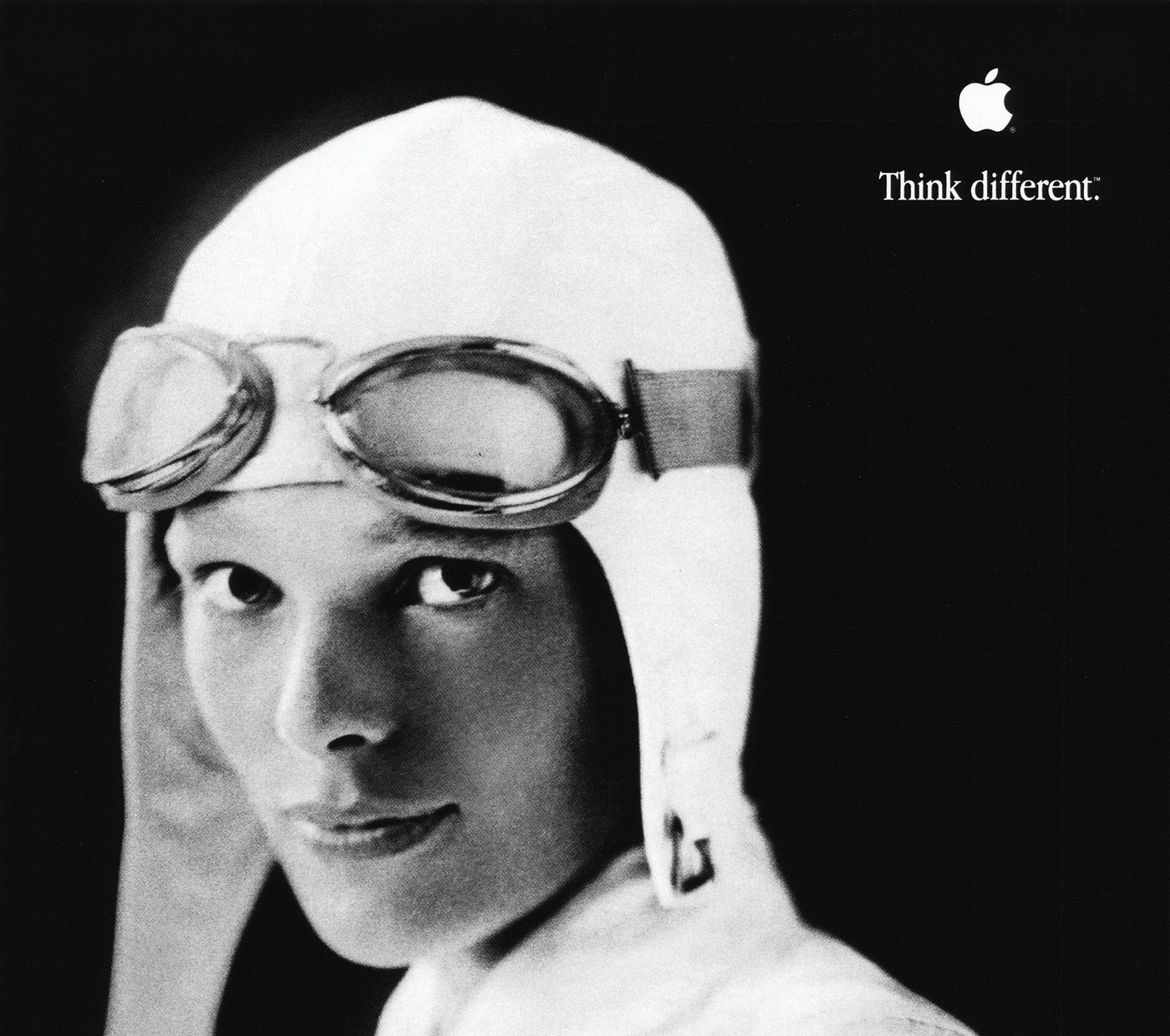
In what became a master class in innovation, Jobs launched a “Think Different” advertising campaign in 1997. Thinking differently, or orthogonal thinking, is what organizations need to get good at to foster innovation. Despite a briskly selling line of colorful iMac computers, the road back to profitability for Apple was a long and arduous one.
Apple was back on the ropes five years after Jobs’ return. In fiscal 2001, Apple’s revenues were down $2.6 billion, or 34%, compared to the $8 billion in fiscal year 2000. On May 15, 2001, Jobs gave journalists, including Walt Mossberg of The Wall Street Journal, a tour of one of Apple’s first retail stores at the Tysons Corner Center shopping mall in McLean, Virginia. When that store opened on May 19, 2001, together with another one at the Glendale Galleria in Glendale, Calif., a crowd of 500 people had formed a line to enter the store. Today, Apple operates 530 stores in 27 countries, including 271 U.S. stores, with an average revenue of $48.5 million per store — generating nearly $25 billion in annual store sales, about 10% of its total revenues.
Apple unquestionably is the most stellar example of what innovation can contribute to the bottom line. In a little over two decades, Apple went from teetering on the precipice of bankruptcy to the world’s most valuable corporation — the first company ever to be valued at $1 trillion in 2018, and today worth more than $4.5 trillion. The company personifies Jobs’ tenets: “Innovation distinguishes between a leader and a follower.” An uncanny assessment, particularly given those 1990s McKinsey studies.
“Innovation distinguishes between a leader and a follower.”Steven P. Jobs · Co-Founder, Apple Inc.
Key Drivers
Innovation does not arise from a vacuum. Four converging forces have made relentless reinvention the only viable strategy for organizations operating in a Time Compression world.
Driver 01
Innovation is part of a ceaseless Darwinian struggle for existence. Of the original 12 Dow Jones companies, only one still survives — and that company was just removed from the index. The “Or Else” wall of fallen giants — Blockbuster, Borders, Kodak, Nokia, Toys R Us — constitutes the most convincing argument for relentless innovation.
Driver 02
With startups multiplying across every sector, virtually every pain point will eventually be addressed. Global venture funding rebounded to $469 billion in 2025, with AI startups attracting $226 billion — nearly half of all venture dollars. In the U.S., VC investment reached $339 billion, a four-year high. Every industry faces its Tesla moment.
Driver 03
Codec technology is the centrifugal force propelling the Time Compression Ubertrend — and innovation’s acceleration cycle. As each successive generation of codecs compresses more data into ever smaller packages, innovations reach market a minimum of four times faster than before. AI and machine learning add further velocity around the periphery.
Driver 04
LinkedIn members holding “Chief Innovation Officer” titles grew from 700 in 2010 to 4,900+ by 2018 — a 1,329% increase in eight years. By 2022, the last year for which numbers are available, LinkedIn members with “innovation” in their title surpassed 8,000. The word “innovation” appeared 33,528 times in SEC filings in 2011, up 64% from five years earlier. The C-suite has made innovation a board-level mandate.
The Osmosis Problem
The Wall Street Journal captured the paradox precisely on May 23, 2012: “Innovation is like teenage sex, everyone is talking about it, but few are doing it. Many organizations, particularly larger enterprises, suffer from hardened arteries. They need a giant enema to allow innovation to flow out freely.”
As Forbes and Wipro discovered in surveying 300 CEOs and C-level executives, studying best practices is the primary way executives today introduce innovation into their organizations. That has resulted in thousands of books, hundreds of conferences and countless innovation consultants. Unfortunately, spurring action is the biggest challenge — the transfer of innovation molecules through a semipermeable corporate membrane.
It’s not easy to bring about a culture of innovation. Follow these four core principles to help bring about change:
Challenge orthodoxies. Clogged arteries keep blood from flowing to the heart and brain. So does an “If it ain’t broke, fix it?” mentality. Creating innovative products or services requires an unfettered flow of ideas, free from old, calcified thinking. Identify unmet needs. How do customers interact with current market solutions? What challenges do they encounter? This “pain point” analysis is one of the quickest ways to bring about innovation. Leverage resources. Large organizations can easily leverage existing resources, including corporate libraries and customer research, to brainstorm ideas. Ride trend waves. Trends are undoubtedly the best platforms for innovation because change equals disruption. Adapt innovative solutions to address pain points raised by the Unwired and Time Compression Ubertrends.
“The successful companies of tomorrow will address the changing customer values of today.”Michael Tchong · Ubertrends
Feature Figure · Think Different
Conceived by Art Director Craig Tanimoto at the L.A. office of TBWA/Chiat/Day, Apple’s 1997 “Think Different” campaign was inspired by René Magritte’s surrealist masterwork, Ceci n’est pas une pipe. These bold yet straightforward ads featured history’s great individualists — Albert Einstein, Mahatma Gandhi, Martin Luther King, Jr., Muhammad Ali, Pablo Picasso and Amelia Earhart, pictured here, among others. Thinking differently — or orthogonal thinking — is the first principle of practicing relentless innovation. The campaign ran as Jobs was steering Apple back from the brink of bankruptcy, proving that great ideas, clearly communicated, can change not only a company’s fortunes but the world’s.
Cultural Manifestations
From the Gutenberg press to generative AI, innovation has always accelerated its own velocity — each breakthrough compressing the timeline to the next.
Empirical Evidence
Innovation case studies demonstrate that when practiced relentlessly, and with attention to detail, innovation virtually guarantees financial success. The key is actually putting innovative ideas into practice.
Case Study 01
Apple’s revenue trajectory tells the story in numbers: $5.4 billion (2001) → $239 billion (2017) → $416 billion (2025). The company harnesses 86% of the smartphone industry’s total profits and generates $5,546 per square foot in retail — the highest productivity in retail history. Apple’s New York flagship alone generates $427 million per year. The lesson: the iPhone year after year, never resting on its laurels.
Case Study 02
The collage of fallen giants constitutes the most convincing argument for relentless innovation: Arthur Andersen, Bear Stearns, BlackBerry, Blockbuster, Borders, Circuit City, Enron, Kodak, Lehman Brothers, MySpace, Nokia, Pan Am, RadioShack, Toys R Us, Woolworths and dozens more. Each was once an industry leader. Each failed to practice relentless innovation. As Microsoft Co-Founder Bill Gates observes, “Innovation fundamentally shifts the trajectory of development.”
Case Study 03
From pizza to shapewear: Domino’s stock appreciated more than 2,000% since 2010. Sara Blakely launched Spanx with zero debt, no outside investment, and zero advertising spend — Forbes named her the world’s youngest self-made female billionaire at 41. By 2018, Square (now Block) had generated $3 billion in revenues by eliminating the single biggest pain point in merchant transactions. lululemon, which rode the Fountain of Youth and Casual Living Ubertrends simultaneously, commanded a $17 billion market cap at the time of publication.
Asymmetric Aspect
Counter-Forces
Four forces that impede relentless innovation
Barrier 01
The word “innovation” appeared 33,528 times in SEC filings in 2011, up 64% from five years prior. Buzzword inflation has diluted the mandate. A Forbes/Wipro survey of 300 CEOs found that 80% said studying best practices was their primary innovation assimilation tool. A CB Insights survey of 677 corporate strategy executives confirmed the lack of entrepreneurial zeal: 85% said innovation was very important, yet 78% focus on incremental changes rather than disruptive risks.
Barrier 02
Large enterprises generate innovation-killing antibodies at scale. More than 10–15% of “Innovator’s DNA” assessments find that world-class innovation leaders actively discourage people around them from innovating. Territorial egos remain the chief structural barrier. As GoodData CEO Roman Stanek bluntly told TechCrunch: “I can tell you with confidence that there is no way Dell has the culture or the ass-kicking visionary à la Steve Jobs that it needs to be even remotely considered a startup.”
Barrier 03
More than 30,000 consumer products are launched each year, with a 95% failure rate. Of venture-backed startups, 75% ultimately fail. Even proven innovators stumble: Cisco paid $590 million for the Flip video camera in 2009 and shut the division just two years later when the iPhone added video capability. Innovation is a life-and-death struggle, and even the best-equipped players routinely lose.
Barrier 04
The real problem is that many organizations treat innovation as a conference to attend rather than a culture to build. Subterfuge revolving around how well an organization is handling innovation can reach the highest levels — as illustrated by the luxury real estate firm whose principal warned against mentioning digital tools for fear of unleashing a storm of “why don’t we have that?” questions from the sales team. A telltale sign that an organization is not as cutting-edge as it says it is.
Forward Implications
TL;DR — The reason innovation is on a tear is that life changes are taking place at warp speed. The converging forces of the eight Ubertrends described in this book will make society spin like a kinetic flywheel, rendering the future even more unrecognizable than it already is.
Cross-References
Chapter 04
Time Compression
Codecs and AI machine learning are the centrifugal force that accelerates the innovation cycle by a factor of four, compressing design-to-market timelines and demanding faster reinvention from every industry.
Chapter 01
Digital Lifestyle
The master Ubertrend and the primary arena of disruptive innovation — from the iPhone to AI to blockchain. Digital Lifestyle contains all other Ubertrends and is the foundational substrate on which the most consequential innovations of the era are built.
Chapter 05
Unwired
The smartphone as innovation platform: Nest, Domino’s smartwatch ordering, Square, Starbucks Mobile Order & Pay, Uber, and Airbnb all depend on the untethered mobile consumer. Unwired created the conditions for a thousand disruptive innovations.
References
Editor’s Note
This reference page covers the Innovation chapter of Ubertrends — How Trends and Innovation Are Transforming Our Future by Michael Tchong (2019). Statistics referencing market capitalizations, store counts, VC funding levels, and startup metrics reflect the CC2026 updated edition of the source material, with Apple’s trajectory extended through fiscal year 2025 ($416 billion revenues; IBM full-year 2025 revenue $68 billion). Global venture funding figures reflect CB Insights and KPMG 2025 data. The 2006–2019 comparison table of the five largest U.S. companies by market cap reflects figures as of January 2019. The Think Different image is courtesy of Apple Inc.