Understanding the forces reshaping civilization
Eight structural forces are converging to reshape how people live, work, consume, and relate to one another. Not headlines. Not microtrends. Ubertrends — deep currents that move slowly enough to miss, and fast enough to strand anyone who does.
“The most influential trend-spotter in America.”
Harry Mount · The Daily Telegraph, London · November 22, 2003The Framework
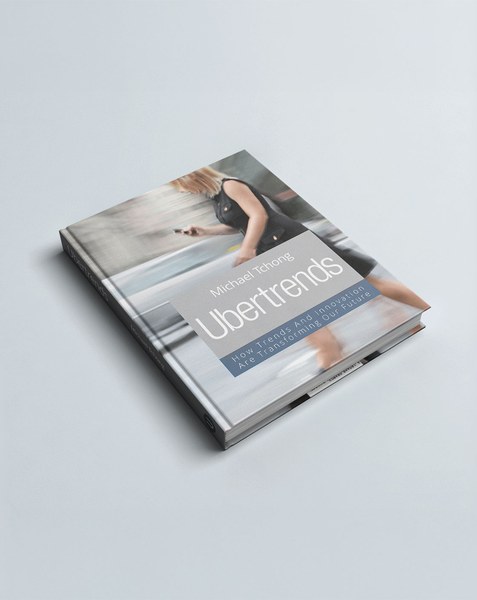
Ubertrends are not predictions. They are structural observations — patterns confirmed across demographics, decades, and geographies that signal durable shifts in human values and behavior. First identified and named by Michael Tchong in the 1990s and codified in the 2019 book Ubertrends — How Trends and Innovation Are Transforming Our Future, each Ubertrend describes a distinct vector of civilizational change.
Together, they form an interconnected framework. Digital Lifestyle accelerates Voyeurgasm; Time Compression pressures Casual Living; WAF reshapes Fountain of Youth. The Ubertrends do not operate in isolation — they are a system, and Innovation is the mandate that runs beneath all of them.
Method
Identifying an Ubertrend requires something that data alone cannot provide: pattern recognition across time. A microtrend peaks and recedes. An Ubertrend deepens across decades, surviving recessions, technological disruptions, and cultural reversals. The question is not whether a shift is happening — it is whether it will still be happening in 20 years.
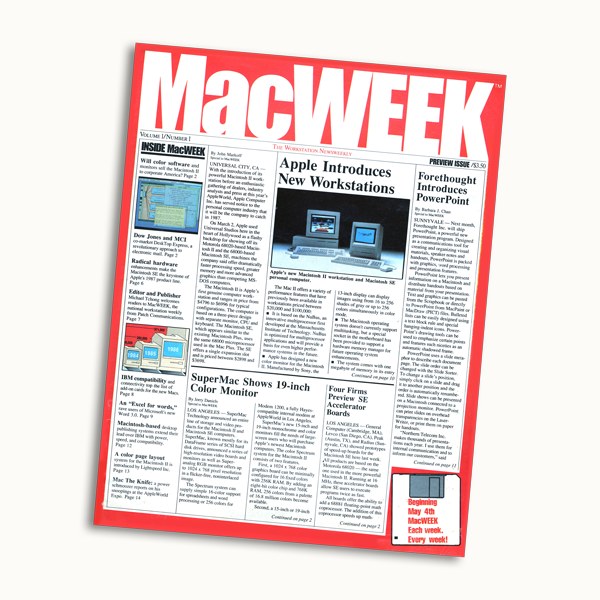
Michael Tchong has been identifying these forces since the 1980s, working from the premise that the most consequential shifts are usually invisible to the people living through them. MacWEEK captured the digital desktop revolution in 1987. CyberAtlas mapped the commercial internet before most organizations had heard of it. The Ubertrends framework itself was assembled from decades of watching markets, technologies, and consumer behaviors converge.
The methodology combines demographic data, economic indicators, cultural observation, and directional foresight. Each Ubertrend is documented with sourced evidence, historical trajectory, key drivers, cultural manifestations, empirical case studies, counter-forces, and forward implications — the same structure across all nine reference chapters.
“Trends are undoubtedly the best platforms for innovation because change equals disruption.”Michael Tchong · Ubertrends
The framework has been tested before 500+ audiences across three decades, refined against corporate strategy sessions, keynote engagements, and academic settings. What survives that kind of scrutiny is not prediction — it is structural clarity.
A Career at the Edge of Change
Each company Michael Tchong built arrived slightly early — which is exactly the nature of foresight. MacWEEK anticipated the desktop revolution. Atelier anticipated CRM. CyberAtlas anticipated digital advertising intelligence. ICONOCAST and Web Attack! anticipated the convergence of internet culture and marketing. The Ubertrends book gave three decades of pattern recognition a durable structure.
1984 – 1987 · Founder & Publisher
Founded the weekly trade publication covering the Mac ecosystem, pioneering the first all-Mac production system in publishing. Commissioned the first digital art ever produced by Peter Max and Keith Haring for a national publication. MacWEEK became essential reading for the professional Mac community.
1989 – 1993 · Founder & CEO
Created Hello, a personal information manager that anticipated CRM software by nearly a decade. Its modular, contact-centric architecture remained conceptually ahead of commercial products that followed — a lesson in how good design outruns its market.
1994 – 1996 · Founder
Built CyberAtlas, the internet’s first online market research portal, for the emerging world of digital advertising. Acquired by Internet Profiles Corp. (I/PRO) in 1996 — one of the earliest acquisitions in internet media history.
1997 – 2001 · Founder & Publisher
Founded ICONOCAST, the leading e-marketing intelligence newsletter, and produced Web Attack! — the most successful digital marketing conference of its era. Featured cultural figures Dennis Rodman, RuPaul, and Cindy Margolis at the peak of dotcom energy.
The Book · 2019
Published in 2019, the book assembles three decades of observation into a single coherent framework. It charts the eight structural forces reshaping civilization, documents their cultural manifestations, examines the counter-forces pushing back, and traces the forward implications that will define the next generation of human behavior. The Ubertrends Reference site is the living digital companion to that work.
What Audiences Remember
Spot-on, funny and occasionally irreverent, Michael was easily the highest rated speaker at our Leadership Summit. I’m sure we’ll bring him back to NAR again, as I look forward to hearing him a third time!
Janet Branton
Senior Vice President
National Association of REALTORS
Michael Tchong is a world class futurist, trendcaster and speaker. He left our audience simultaneously stunned and energized by his incredible presentation of the acceleration in technology and social media.
Joni Doolin
CEO
People Report Best Practices Conference
Michael offered compelling insights into the trends of global society, challenging our thinking about how to serve tomorrow’s customers. His style is entertaining and engaging.
Jay Witzel
President & CEO
Carlson Hotels Worldwide / Regent Hotels
Michael helped our Planning Leadership Team broaden our perspective and look into the future implications for our business.
Cliff Robinson
Vice President, Field Operations
Chick-fil-A Inc.
The Reference
The Ubertrends Reference is a series of nine fully-sourced, extensively documented chapters — one for each of the eight Ubertrends, plus Innovation. Each chapter follows a consistent structure: origin and etymology, chief aspects and key drivers, cultural manifestations, empirical evidence, counter-forces, forward implications, and a full bibliography. Together they form a canonical reference for anyone seeking to understand the structural forces reshaping human civilization.
The archive is designed to expand. Subtrend dossiers, updated figures, and emerging pattern analysis will be added as the forces documented here continue to evolve.
Emerging Dossiers
AI & Synthetic Intelligence
How generative AI reshapes Digital Lifestyle, Time Compression, and the Innovation mandate simultaneously.
Emerging Dossiers
Robot Love
The convergence of Voyeurgasm, Digital Lifestyle, and AI into new forms of synthetic intimacy and parasocial attachment.
Emerging Dossiers
Creator Culture
The Voyeurgasm × WAF × Generation X-tasy intersection driving the attention economy and the professionalization of personal media.
Emerging Dossiers
Surveillance Normalization
The deepening of Voyeurgasm as facial recognition, behavioral tracking, and ambient computing become infrastructure.
Emerging Dossiers
Digital Intimacy
How Unwired and Digital Lifestyle are rewriting the grammar of human connection across distance, platform, and identity.
Emerging Dossiers
Longevity Economy
The Fountain of Youth Ubertrend extended into biotech, GLP-1, and the commodification of biological time.
Connect
Michael Tchong is available for keynote presentations, executive strategy sessions, media appearances, and research collaborations. Licensing and syndication inquiries are also welcome.
Keynote presentations, executive briefings, conference appearances. Topics cover the Ubertrends framework, AI, digital transformation, and long-term civilizational change.
Interview requests, commentary, expert sourcing, and broadcast appearances. Michael has been featured in The New York Times, The Wall Street Journal, Wired, CNN, and Bloomberg TV.
Custom trend research, foresight sessions, and strategic consulting for organizations navigating structural change. Engagements are tailored to industry context and leadership horizon.
Co-production, platform partnerships, and joint research initiatives. Organizations building AI-assisted knowledge workflows are especially encouraged to reach out.
The Ubertrends framework and reference material are available for licensing. Syndication rights for the reference chapters and emerging dossiers are available to qualified publishers.
For all other questions — academic correspondence, permissions, or introductions — the Contact page is the right place to start.